Boat fenders are essential equipment on board. But how many do you need, what size should you choose, and how do you position them at the correct height? Choosing the wrong fenders or positioning them incorrectly can leave your boat insufficiently protected. In this article, we share practical tips to help you make the right choice and get the most out of your boat fenders.
What are boat fenders and why are they important?
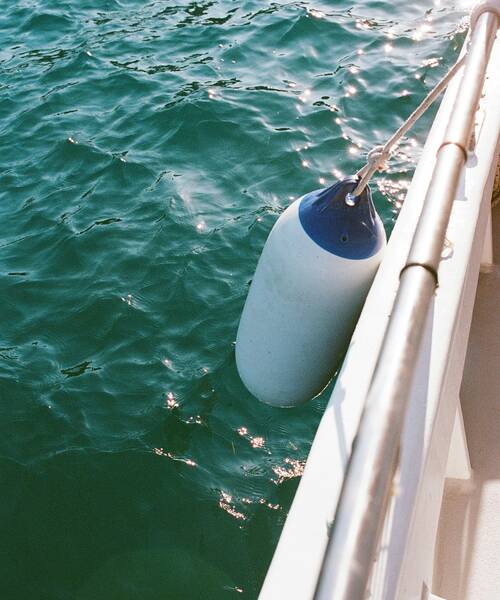
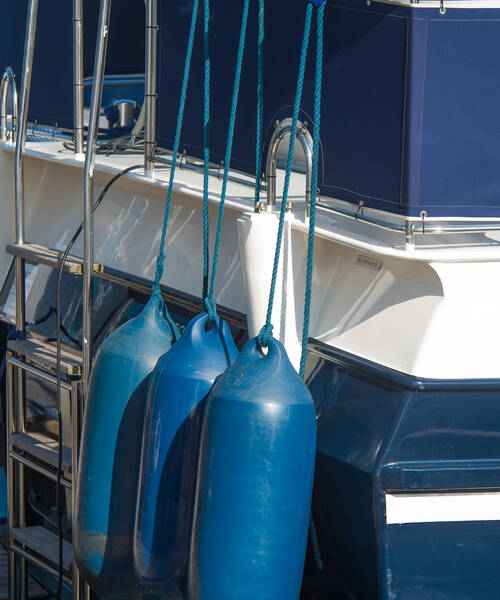
Boat fenders are protective cushions that hang along the outside of your boat. They create a buffer between the hull and a dock, quay or neighbouring boat. This helps prevent scratches, scuff marks and other damage when your boat comes into contact with another surface.
Choosing the right type of fender is important, but positioning it correctly makes just as much difference. When your fenders are placed in the right locations, they can provide effective protection.
How to choose the right fenders for your boat
The type of fenders you need mainly depends on your boat's weight and hull shape. Cylindrical fenders are suitable for protecting the sides of your boat, while round ball fenders create extra distance between the hull and the dock, for example at the bow.
Besides the shape, size is also important. The larger and heavier your boat, the more pressure your fenders will generally need to withstand. Larger fenders typically provide greater clearance and, depending on their design, can handle higher loads. Always check the manufacturer's size recommendations to determine which fenders are suitable for your boat.
Make sure you have enough fenders on board
A useful rule of thumb is approximately one fender for every 2.5 to 3 metres of boat length. For an eight-metre boat, this means you will need around three fenders on the side used for docking. Keep in mind that additional fenders are advisable in rough water, when your boat has a delicate hull or when docking conditions are challenging.
Just as important as the number of fenders is how you distribute them. Position them wherever the hull might come into contact with a dock, quay or neighbouring boat.
Position your fenders at the correct height when docking
There is no single correct height for hanging boat fenders. Each fender should be positioned where the hull might come into contact with the dock or a neighbouring boat. If it hangs too high, the hull may still make contact underneath it. If it hangs too low, the fender could slip beneath the dock.
Pay close attention to the height of the docking area and the shape of your hull. Adjust your fenders before approaching the dock and check that they are correctly positioned as you get closer.
In the boating community, cruising with your fenders hanging over the side is often considered a real no-go. Other boaters may get the impression that you lack confidence in your boat-handling skills or frequently bump into things. Although fenders protect your boat when docking, they should generally be brought on board while cruising. Make sure to pull them up after departure and store them safely.
When cruising, it is best to store your fenders towards the bow or stern of your boat, or anywhere else where they will not get in the way. Above all, make sure they do not obstruct walkways. Otherwise, you could trip over them while moving around on board. Secure them properly to prevent them from shifting while underway.
An inflatable fender should feel firm but still give slightly when you press against it. Overinflating reduces its flexibility, while insufficient air pressure can limit the protection it provides. Always follow the manufacturer's recommended inflation pressure.
Fenders are specifically designed to protect your boat from damage. However, in some cases, they can cause minor scratches or scuff marks, for example when sand or dirt becomes trapped between the fender and the hull. Cleaning your fenders regularly can generally help prevent this.
Attach and adjust your fenders quickly with Fastfender
Tying, untying and readjusting fender lines every time you dock can be time-consuming. Especially if you dock frequently or need to switch sides while manoeuvring, being able to adjust the height of your fenders easily makes a real difference.
With Fastfender, you can attach and adjust your boat fenders without having to tie a new knot each time. This allows you to position them at the desired height in no time and make quick adjustments whenever the situation calls for it.
We've had these for the past 2 years and they are by far the best fender holders we've every had. Once the fender is attached at the right length, the holder can be easily added or removed from the boat rails. They stay secure and are very strong.
Great idea and product!
It may be simple but most amazing things are. I bought them for my Sea Ray 240 Sundancer and it makes fender adjustments for different docking or rafting tie ups very easy. Plus install/ removal is so much nicer than dealing with four lines all the time.
Easy to use
I've used a lot of different fender holder quick tie ups over the years with both boats I've owned and these work and are by far the easiest I've used for quick adjustments.
This makes docking the boat easy
Excellent product! The design also allows for quick pack up at the end of the day. Takes 15 seconds to attach/ detach 4 fenders. I love boating and anything that makes it easier is a great find.
Should have gotten them sooner
I used to get annoyed with permanently tied bumpers on a 20' key west boat. Passengers that rode in the front area would have to use the bumpers as pillows.
Now I can easily take off the bumpers and store them out of the way, the clips worked great on hand rails on the bow as well as the metal poles that hold the canopy.